The key points
- A lack of fluid can temporarily raise values such as Hb, because the blood becomes more concentrated when plasma volume falls.
- Body position matters too. Hb can sit somewhat higher when you are up and walking than when you sit or lie down.
- Heavy exertion can affect muscle cells. The muscle enzyme CK starts rising 2 to 12 hours later and can stay elevated for days.
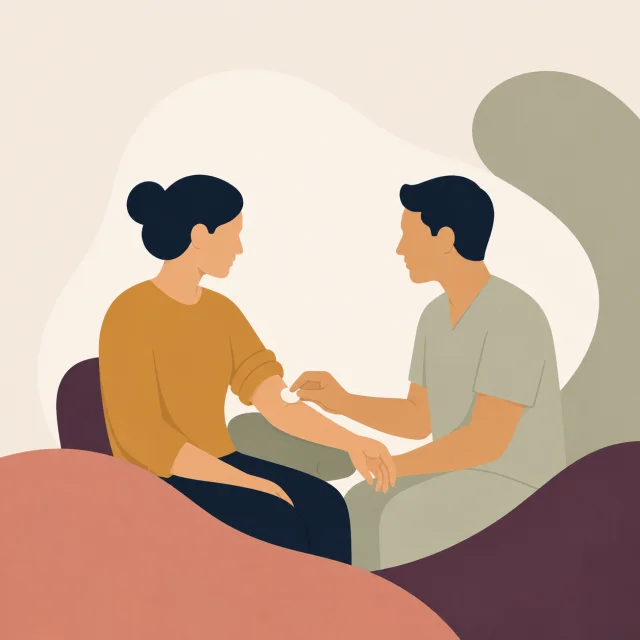
- Reference intervals are usually based on samples taken after 15 minutes of seated rest, which is why you are asked to sit for a while before the draw.
- A surprising value taken right after training or during fluid deficit may need to be retaken under normal conditions before it means anything.
What fluid loss does to your blood
Blood consists of blood cells and plasma, and plasma is mostly water. When your body loses fluid, the plasma volume shrinks while the number of blood cells stays the same. Concentrations rise, and tests that measure concentration show higher values.
Hb is the clearest example. According to 1177, Sweden's national health information service, a lack of fluid in the body can temporarily produce high Hb values. The same mechanism is described in the medical literature as raised Hb and EVF (haematocrit) caused by reduced plasma volume.
The value is measured correctly, and it reflects your fluid status at the moment of sampling. A test taken after a sweaty night or a long session without fluid shows a more concentrated version of you than usual.
How a hard workout shows up in results
Hard physical effort affects the muscles, and the muscles show up in the blood. With heavy muscle strain, muscle cells leak their contents, including the enzyme creatine kinase, CK. In the medical literature, excessive physical training, especially in heat, is listed among the causes of pronounced muscle breakdown.
CK also moves slowly. The value starts rising 2 to 12 hours after the muscle strain, peaks after 24 to 72 hours, and then falls over several days. A CK taken in the days after a hard session can therefore be elevated even though your muscles already feel recovered.
This is why sampling instructions treat muscle work as a source of error. According to Vårdhandboken, the Swedish national handbook for healthcare, muscle work can affect certain test results, and that is one reason you are asked to sit down for a while before the draw.
Body position and rest before the test
Even without training or fluid loss, your body affects the test. Body position governs how fluid is distributed, and through that many test results. Hb can sit somewhat higher when you are up and walking than when you sit, and the literature cites values up to 10 percent higher in walking patients compared with seated ones.
That is the background to the quarter of an hour on the chair. According to Karolinska University Laboratory, you should rest for 15 minutes before the sample is taken, and most reference intervals are based on samples taken after exactly that: 15 minutes of seated rest.
The rest is part of the measurement method. A value taken right after you cycled to the test site is compared against reference values that assume you sat still for fifteen minutes.
Not every value is this sensitive
Sensitivity differs between analyses. HbA1c, which reflects your blood sugar over the last two to three months, needs no preparation at all and can be taken at any time of day. A single training session or a day with too little fluid does not move it.
What applies to a specific test is stated in the laboratory's sampling instructions. If a test requires fasting, that usually means ten hours without food or drink.
Practical advice before your test
Do not place your test right after a hard session. If you want the result to reflect your normal state, a calm day before the test is a better starting point, especially for values sensitive to muscle work and fluid status.
Drink as you usually do if the test does not require fasting. A sample taken during clear fluid deficit reflects the fluid status at that moment.
Sit down for fifteen minutes before the draw, and repeat tests under conditions similar to last time. If a value looks odd and you know you were dehydrated or freshly trained when it was taken, bring that information to the assessment. Sometimes the right step is a new sample under normal conditions.
Common questions
Can I drink water before a blood test?
If the test does not require fasting, drink as you normally do. If it does, 1177 states that you should not eat or drink for a set time before the test, usually ten hours. Follow the instructions for your specific test, they state what applies.
How long can CK stay elevated after hard training?
CK starts rising 2 to 12 hours after the muscle strain, peaks after 24 to 72 hours, and then falls over several days. The figures come from the care of pronounced muscle injury, and that timeline is the reason not to measure muscle values right after a hard session.
Can dehydration give falsely high blood counts?
Yes, temporarily. When plasma volume falls, the concentration of what is measured rises, and values such as Hb and EVF can sit higher than your usual level. A sample taken in normal fluid balance shows where you usually are.
Should I sit or stand before the blood draw?
Sit. The baseline is 15 minutes of seated rest before the test, and most reference intervals are based on samples taken after that kind of rest. Hb can sit somewhat higher when you have been up and walking.
Sources
- 1177, Blodprov: Hemoglobin, B-Hb
- Internetmedicin, Polycytemia vera (om stegrat Hb och EVF vid minskad plasmavolym)
- Internetmedicin, Rhabdomyolys
- Internetmedicin, Blodstatus
- Vårdhandboken, Blodprov, venös provtagning: förberedelser
- Karolinska Universitetslaboratoriet, Blodprovtagning och förberedelse
- 1177, Blodprov: HbA1c
- 1177, Att lämna blodprov
Markers in this article
More articles in the same area
- Understand your Swedish blood test resultsWhat S, P and fP mean on a Swedish lab report, the units g/L, mmol/L and mmol/mol, and how Swedish values relate to American mg/dL and percent.
- Fasting before a blood testWhich blood tests require fasting in Sweden, how many hours it takes, what you may drink during the fast, and what applies to your medicines.
- Morning or evening blood test: does it matter?Cortisol, testosterone and iron vary over the day and are sampled in the morning. HbA1c can be taken any time. How to choose the time for your blood test.
- What is a reference interval?A reference interval is set so that about 95 percent of healthy people fall inside it. Which means about one healthy person in twenty falls outside.
This article is general health information, not medical advice and not an assessment of your values. If you have symptoms or concerns, contact your healthcare provider.